




Why Good Financial Advice Seems Boring
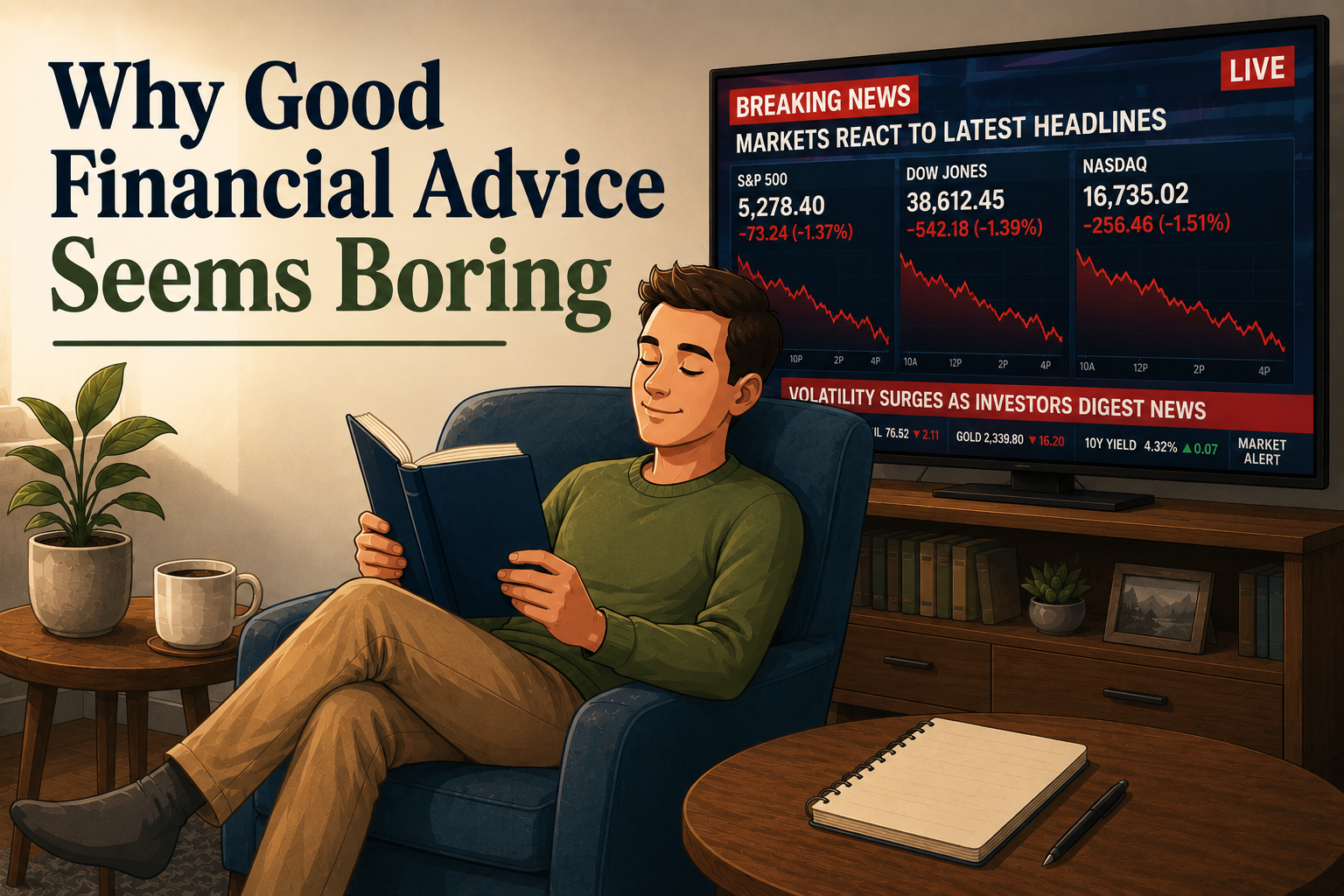
Good financial advice does not make for good content. It never has. There is no compelling story in "invest consistently, diversify broadly, and wait." Nobody is going viral for recommending an index fund. And for people who are just starting to take their finances seriously, that can feel anticlimactic in a world where financial content online is full of people talking about the next big thing. But that feeling of disappointment might actually be the best sign that you are on the right track.
The financial world has a noise problem. Social media, cable news, and investing apps have made it easier than ever to hear about whatever stock is surging this week or whatever new investment is promising outsized returns. That kind of content triggers something in us, the feeling that opportunity is passing us by, that the people who act boldly are the ones who win. The problem is that the evidence simply does not support that narrative.
Studies consistently show that individual investors who try to pick winning stocks or chase high-performing sectors almost always trail the broader market over long periods of time. The math is straightforward. Buying into whatever is hot means buying high, and rotating out when things cool down means selling low. What the data supports instead is something far less exciting: broad, diversified, low-cost investment vehicles that track the market as a whole. Index funds and ETFs are not glamorous. They will never go viral. But over time, they have delivered results that most stock-picking strategies simply cannot match.
The same principle applies to how often you invest. The most effective habit in long-term wealth building is also one of the least thrilling. Putting money away regularly, regardless of what the market is doing, not waiting for a dip, not pausing during uncertainty, just consistently contributing month after month and letting compounding do the work. It is the financial equivalent of showing up, and showing up turns out to matter more than almost anything else.
The investments that make the news are rarely the ones that build lasting wealth. The stories that go viral are usually about outliers, the person who bought early and sold at the peak. What you do not hear about as often are the quiet, steady investors who never chased a trend and simply stayed the course for decades. They are not making headlines. But they are, more often than not, the ones who end up in the best financial position. Boring, it turns out, is a feature and not a bug.