




The Midterm Pattern Every Investor Should Know
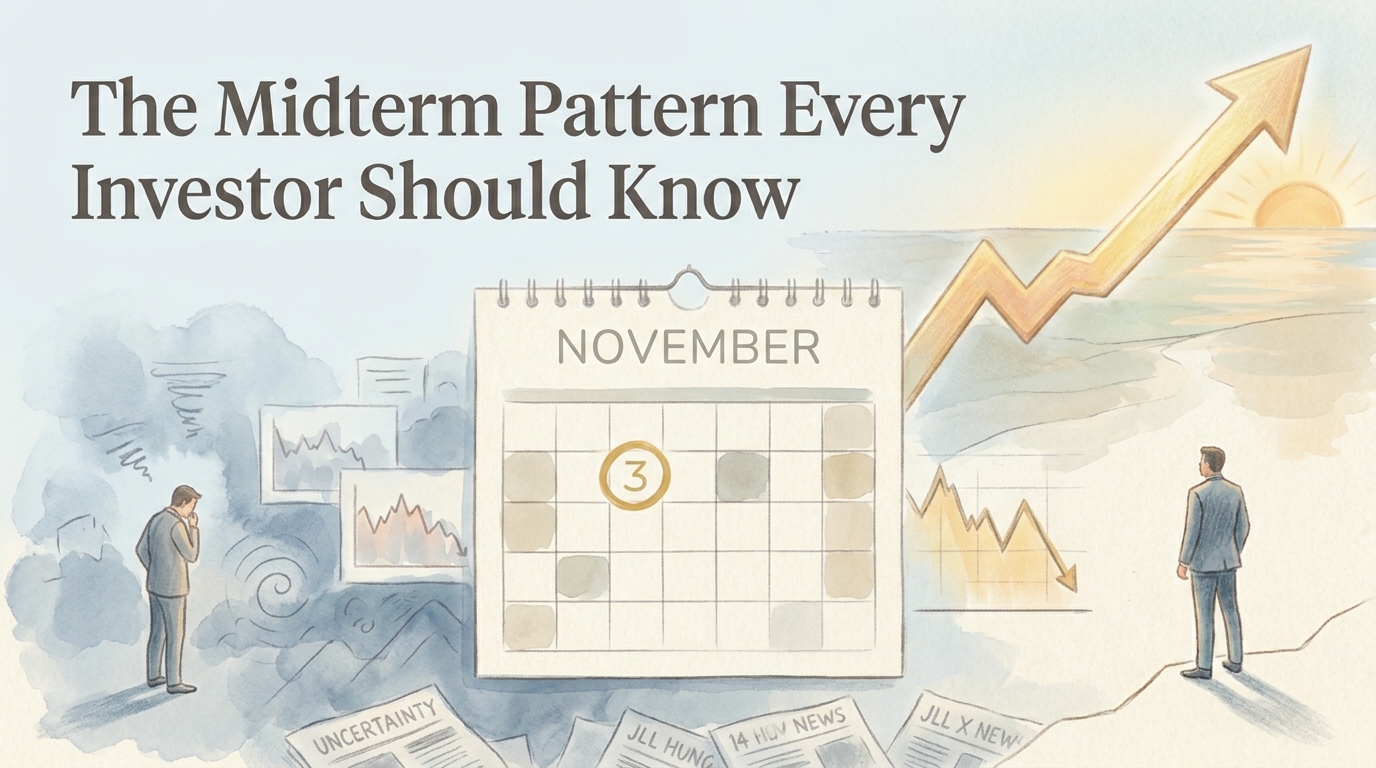
Midterm elections have a way of making everything feel urgent. Every headline, ad, and group chat treats the next vote as the thing that will make or break an investor’s financial future. It is understandable to wonder what it all means for a portfolio. But history offers a calmer answer than the news cycle does.
In each of the 19 midterm elections since 1950, the S&P 500 has been higher both six and twelve months after the vote. The average gains have been in the double digits for both windows. Go back further, to the late 1800s, and the market has still risen in the year after roughly 84% of midterms. The handful of down years, like 1906 and 1930, were tied to a financial panic and the Great Depression rather than the election itself.
Why does this happen? Analysts debate the exact cause, but one common explanation is uncertainty. Markets tend to drift in the months leading up to a midterm while investors wait to see what happens. Once the vote is in, the unknown becomes known, and that hesitation fades. Control of Congress has also historically not been a reliable indicator of market returns. What drives returns over time is corporate earnings, economic growth, and the fundamentals underneath, not the outcome on a ballot.
A strong portfolio is not built around an election cycle. It is built around goals, a timeline, and a diversified mix of investments designed to hold up through many different political climates. When headlines get loud, the discipline to keep that plan in place, and resist dramatic moves based on a single news event, is what protects long-term results.
A word of caution, because honesty matters here. Past performance does not guarantee future results, and history does not repeat on a schedule. Markets can and do fall for reasons that have nothing to do with politics. The pattern is not a prediction. It is a reminder that election outcomes have rarely been what determines long-term results.
Elections come and go, and the long-term story of investing has always been bigger than any one of them. Staying invested, staying diversified, and staying patient remains a sounder approach than trying to trade around the ballot box.